The Anatomy of a Perfect
Shipping Container

When it comes to bulk shipments, building the perfect shipping container is both an art and a science. For BJ's Business, it all begins with a conversation.

Before a single pallet is loaded, our team works closely with each member to understand exactly what they need. From destination to container size, every detail plays a role in ensuring products arrive safely, efficiently, and ready for business.

Here's a closer look at the anatomy of a perfectly built container.

Image: Writing questions
It Starts with the Right Questions
Every successful container begins with a few essential questions from our team:
· Where is the container shipping?
· What goods will be included?
· What size container do you need?
These early discussions guide everything that follows — from product selection to pallet configuration — ensuring your shipment is built for efficiency and success.
Let's connect
Why Destination Matters
A container's final destination plays a critical role in determining how it is planned and constructed. Longer transit times require careful attention to shelf life. Perishable items such as fruits and vegetables have much shorter lifespans than dry pantry goods. Products must be fresh enough to withstand:
truck icon
Transit time
shelve icon
Time on your shelves
home icon
Time in your customers' homes
Expiration dates are a critical factor. For example, if shipment takes 90 days to arrive and an additional 90 days for sell-through, products must have a shelf life that exceeds 180 days at the time of loading. Careful planning helps protect product quality, reduce shrink, and support your bottom line.
Image: Loading container
Pick and Pack vs. Mixed Containers
Both Pick and Pack and Mixed containers allow you to build a diverse assortment of products across multiple categories, giving you flexibility to meet your business needs. The key difference lies in how the items are sourced and the impact on timing.
Pick and Pack containers are fulfilled using in-stock inventory from BJ's clubs or distribution centers, which helps shorten lead times and speed up container completion. Mixed containers, on the other hand, often include specially ordered products, making them a great option when you need a broader or more specific assortment — but with a longer build timeline.
Choosing between the two depends on your priorities: faster turnaround with available inventory, or expanded variety with made-to-order selections.
Image: single item
Single Category vs. Single Item Containers
Single Category and Single Item containers are both designed to support focused purchasing strategies, but they serve different operational needs.
A Single Category container offers a range of products within one category — such as a variety of beverages — providing depth and assortment while staying within a specific product type. In contrast, a Single Item container is built for volume, filled with pallets of a single SKU. This option is ideal for businesses that need large quantities of a specific product, enabling streamlined inventory management, easier receiving, and greater operational efficiency.
The right choice depends on whether you're looking to offer variety within a category or maximize efficiency with high-volume purchasing of a single item.

SPEAK TO AN EXPERT

Understanding Container Sizes
Container size directly impacts how pallets are built and how much products can be shipped.
BJ's Business primarily uses three container sizes:
20 foot hight container icon
20ft and 40ft standard containers:
Pallets are built to 7 feet tall.
40 foot hight container icon
40ft high cube containers: One foot taller than
standard containers, allowing pallets up to 8 feet tall.
While container height varies, pallet height must allow clearance for safe forklift operation during loading. That additional vertical space can significantly increase shipping efficiency.

Image: Reefer
Refrigerated Containers (Reefers)
For temperature-sensitive shipments, refrigerated containers — commonly known as reefers — are available in the same threee sizes. However, due to insulated walls and built-in cooling systems, pallet height allowances are slightly reduced:
· 20ft and 40ft reefers: 6-foot pallet height
· 40ft high cube reefers: 7-foot pallet height
The insulation and cooling systems ensure product integrity throughout transit, while careful pallet planning maximizes usable space.
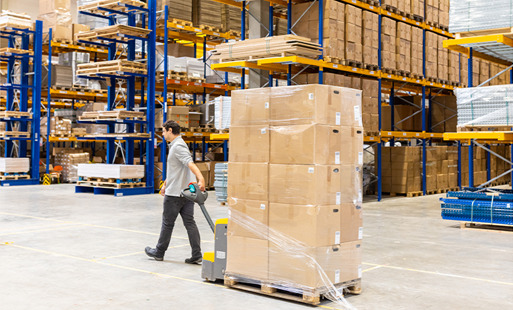
Image: Loading container
Precision From Start to Finish
Building the perfect container requires thoughtful coordination at every step — from selecting products with the right expiration dates to optimizing pallet height and assortment mix.
At BJ's Business, our team focuses on asking the right questions upfront, so your shipment is efficient, compliant, and tailored to your business needs. The result is a container that arrives well-built, well-timed, and ready to drive sales.
Ready to build your next container? Connect with the BJ's Business team to get started.

CONNECT NOW

For more information on how BJ’s Wholesale can support your business in reaching its growth goals,
contact us here or email us at bjsbusiness@bjs.com.